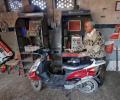
The new scheme may link the incentives to the battery power - higher the power, higher the incentive and most electric two-wheelers running on Indian roads use low power and fast charging batteries.

Under the scheme, the government will provide financial incentives for each electric vehicle sold in India during the remaining part of the 11th Plan.

'Government officials use Gmail and ordinary phones without basic security consciousness.' 'Interoperability, especially in joint exercises with countries like the US, worries me.' 'It often means we open our systems to them, but they don't reciprocate.' 'They could have kill switches in their systems and might even be able to affect ours.'

Even as India overtakes Japan in automotive sales in 2022, moving to third place for the first time, oddly enough the country's biggest motor show is going to see some big hitters give it a clear miss. Some prominent automotive brands have cited high event costs, negligible returns on investment, poor event management, and unfavourable location as reasons for their reluctance to participate. Major pure-play electric two-wheelers, too, are riding past this year's edition of the Auto Expo.
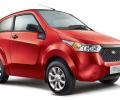
If the drop in sales over the past two years is anything to go by, India's dream of putting seven million electric vehicles on road by the end of this decade has come a cropper.

The electric vehicle evolution in India's passenger vehicle market has remained frozen in time and may see limited adoption over the next decade, experts say.
Govt will save Rs 30,000 cr in fuel by giving Rs 14,000 cr subsidy to industry for making electric vehicles.

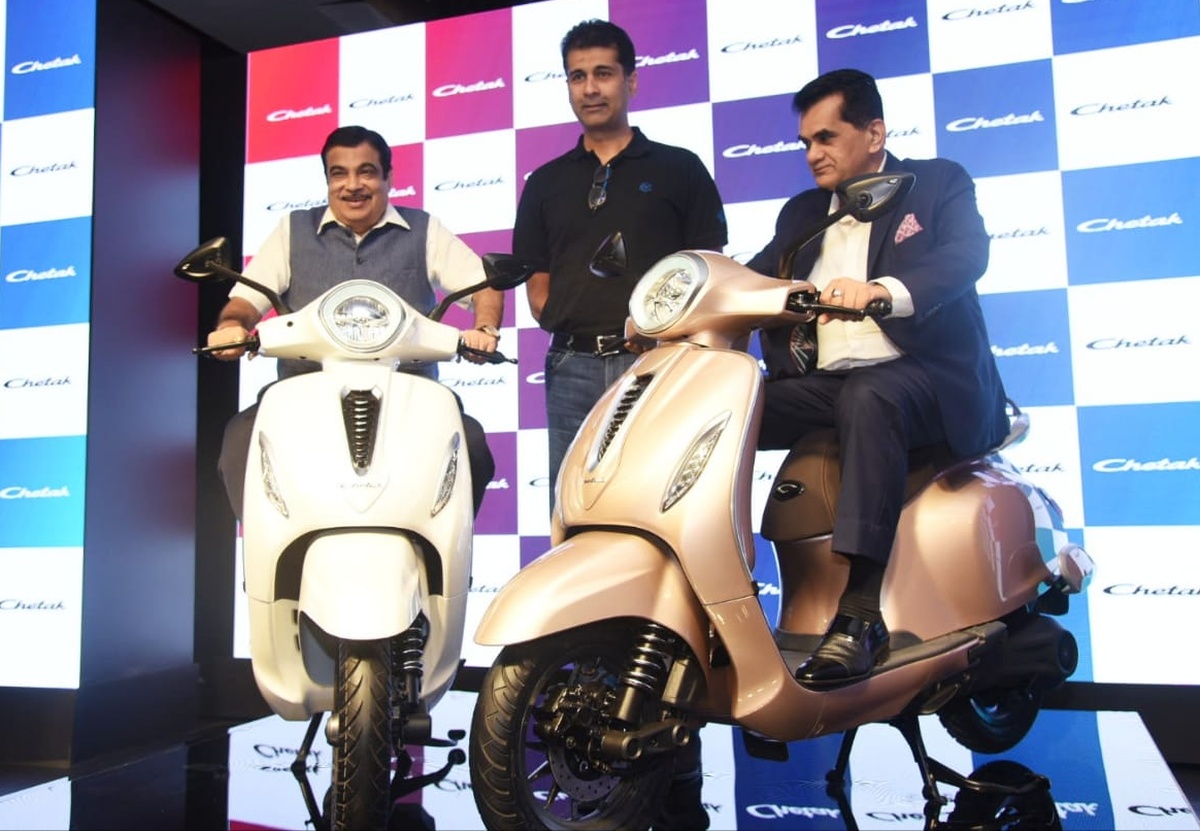
The state is also the biggest market for TVS, another incumbent player, and together with Bajaj Auto, they accounted for 88 per cent of Maharashtra's total electric scooter sales last month. As many as 8,417 units were sold in Maharashtra in September. Bajaj Auto's contribution was 4,048 vehicles and that of TVS was 3,389, according to model- and state-wise data from the Society of Indian Automobile Manufacturers (Siam).

"There were discussions and the ministry had received suggestions that petrol-diesel vehicles should be banned. I would like to clarify that the government does not intend to ban petrol and diesel vehicles. We are not going to do anything like that," Gadkari said, addressing a gathering at the Society of Indian Automobile Manufacturers (SIAM) annual convention, 2019.

The new scheme, promoting manufacturing of electric vehicles (EVs) by global majors, will give a fillip to companies like Tesla and its upstart rival Vinfast, both of whom have lobbied for lower import duties from the Centre. While Vinfast has already announced an investment of Rs 4,000 crore to set up an electric vehicle (EV) plant in Tamil Nadu, Tesla's next move will be watched carefully. Four years ago, Musk announced that his company would come to India.

Model 3 received 180,000 orders worldwide.

The death toll in the BEST bus accident in Mumbai has risen to seven, officials on Tuesday said as experts inspected the wet leased vehicle to ascertain if it had any mechanical fault.
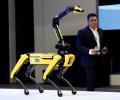
Innovation ranging from exterior designs of vehicles to EV charger locks grabbed eyeballs at the expo
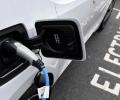
Proliferation of home chargers of around 7 KWh and above, which take six to seven hours to fully charge a car depending on the model, bring running costs down by a third or so. That, coupled with the increasing range of modern electric cars, can lead to a massive increase in sales.
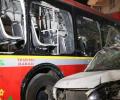
A BEST electric bus, traveling at a speed of 46 kmph, collided with a crowd in Kurla, Mumbai, killing seven people and injuring 42 others. The driver, Sanjay More, has been arrested for reckless driving. The accident has raised concerns about speed limits and training for drivers of automatic transmission buses.
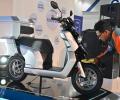
as the FAME II deadline of March 31, 2024, nears, EV manufacturers are worried about their investments and future plans.
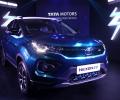
Passenger vehicle sales in India could hit a record of over 38 lakh units in FY23 but the strong growth momentum is not expected to carry over to 2023-24 with pent-up demand already been released, according to Tata Motors Passenger Vehicles managing director Shailesh Chandra.
'Some companies have agreed to 2-3% incentive but the automakers and SIAM have to decide amongst themselves'

Auto Expo 2023 may not trigger a fresh rally in automobile stocks, say analysts, as this year's edition lacks participation from major listed players. It is also owing to the focus on electric vehicles (EVs), a segment where four-wheelers have minuscule market share. "In the passenger vehicles (PV) segment, Maruti Suzuki India and Tata Motors are the only listed players.

During the six-day-long event, automakers have planned 10 global launches, 26 India specific launches, six concept vehicles, seven facelifts and 21 vehicle unveilings.
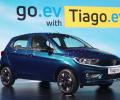
China's covid crisis could provoke a raw material crunch for India's EV industry later this year.

With only a handful of models by a few manufacturers including Tata Nexon, MG ZS, Hyundai Kona, among others, the segment has remained under tapped.

...But sales of domestic passenger vehicles dropped 2% to 3% year-on-year in August owing to low demand.
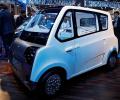
An EV has to be purchased along with the battery as there are hardly any battery swapping, rental, or leasing business models available across India.
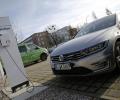
The electric vehicle market in India needs a policy push that goes beyond targets, says Vandana Gombar.

'Wherever the government has provided incentives for the purchase of two-wheelers, three-wheelers, cars, buses, and trucks, it gets a push for most of these alternate fuels. '
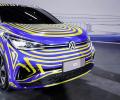
Ahead of the upcoming Union Budget, Society of Manufacturers of Electric Vehicles (SMEV) has asked Finance Minister Nirmala Sitharaman to either rejig the FAME II scheme or reintroduce FAME I, saying the programme meant to promote EVs in its second avatar has been able to achieve less than 10 per cent of its target. The Rs 10,000-crore FAME-II scheme which is to be implemented over a period of three years, came into effect from April 1, 2019. It is the expanded version of FAME India I (Faster Adoption and Manufacturing of (Hybrid) and Electric Vehicles (FAME) which was launched on April 1, 2015, with a total outlay of Rs 895 crore.

Maharashtra Chief Minister Eknath Shinde on Wednesday said Memorandums of Understanding worth Rs 1.37 lakh crore have been signed at the World Economic Forum (WEF) annual meeting in Davos in Switzerland and termed it as a "big achievement". This will generate employment for one lakh people, said Shinde, who was in Davos to seek investments in Maharashtra. "The MoUs will not remain just on paper," he said, adding that foreign investors have shown trust and faith in the state government.

New participants included Chinese players such as Great Wall Motors and Haima Automobile along with Olectra.

Maruti will launch its first electric vehicle (EV) in the next financial year (FY24), and will roll out six EVs in the country by FY30, the automaker's parent firm Suzuki said on Thursday.
Senior Tesla executives including those from its supply chain are planning to come to India on Wednesday and Thursday for meetings with government officials, including those in the Prime Minister's Office, according to sources. Prashant R Menon, director of Tesla India, did not respond to a specific query on the meetings. Sources say that the executives are coming to see how they can expand and develop local sourcing of components from India for the Tesla car.
India's three-wheeler exports, which have been on a downhill trajectory over the past few years, are showing no signs of recovery in FY25, with key markets like Sri Lanka, Bangladesh, Nigeria, and Egypt witnessing subdued demand. In May, the country's exports plummeted 11.3 per cent year-on-year (Y-o-Y).
EV players suggest a reduction in the goods and services tax on batteries from 18 to 5 per cent as it would help push demand.
Sales of total electric vehicles in India are expected to be around 10 lakh units this year, equal to what was sold collectively in the last 15 years, mainly riding on the good traction witnessed by electric two-wheelers, Society of Manufacturers of Electric Vehicles (SMEV) said on Thursday. In 2021, the sales of electric two-wheelers (E2Ws) in the country jumped over two-fold at 233,971 units driven by a good traction of high-speed scooters as compared to 100,736 units in 2020, SMEV said in a statement. "We haven't seen better days than the last few months in the entire EV journey.
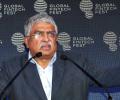
'Binary fission will happen -- startups will lead to more startups.'

While hybrids, CNG and biofuels found favour in 2018 among many carmakers including Maruti Suzuki, Mercedes-Benz, Toyota and Honda, others such as M&M and Tata Motors have shown full faith in electric vehicles.
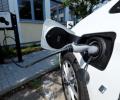
The government will create an EV Venture Capital Fund, for financial support to start-ups in the segment. The overall aim is to make Tamil Nadu the preferred destination for EVs and component makers.
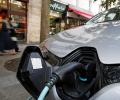
Society of Manufacturers of Electric Vehicle (SMEV) on Thursday said sales of EVs in India fell 20 per cent in the financial year 2020-21 to 236,802 units. In 2019-20 sales of electric vehicles (EVs), including electric two-wheelers (E2W), electric three-wheelers (E3W) and electric four-wheelers (E4W), stood at 295,683 units. For FY21, the E2W segment sales declined by 6 per cent to 143,837 units, as compared to 152,000 units in FY20, SMEV said in a statement, adding that the FY21 E2W sales included 40,836 high-speed and 103,000 low-speed E2W. The E3W segment registered sales of 88,378 units as against 140,683 units sold in FY20.

Recently, Suzuki Motor Corp (SMC) in an investor presentation expressed strong intent to enter the electric vehicle (EV) space. This is part of a larger strategy the Hamamatsu-based firm has drawn up in developing electrification of technologies as it seeks to achieve carbon neutrality. The significance of this presentation is that it marked the first time that the Japanese carmaker spelt out its EV strategy with well-defined timelines. SMC plans to develop electrification technologies by 2025, fully implement them in products from the same year, and make a full-scale quantitative increase from 2030.

Apart from a pavilion of vintage cars, there will be a Bollywood corner
 © 2026 Rediff.com - Advertise with us - Disclaimer - Privacy Policy - Sitemap - Feedback - About us - Terms of use - Grievances